
The PJI-Mini Test
THE PMI-MINI TEST
Instructions:
Take a pen and blank piece of paper.
For each scenario below, rate each of the four decision choices using the following scale:
1 = Totally inappropriate | 2 = Inappropriate | 3 = Unsure | 4 = Appropriate | 5 = Highly appropriate.
There is no expectation that all choices are equally good. Consider each option carefully.
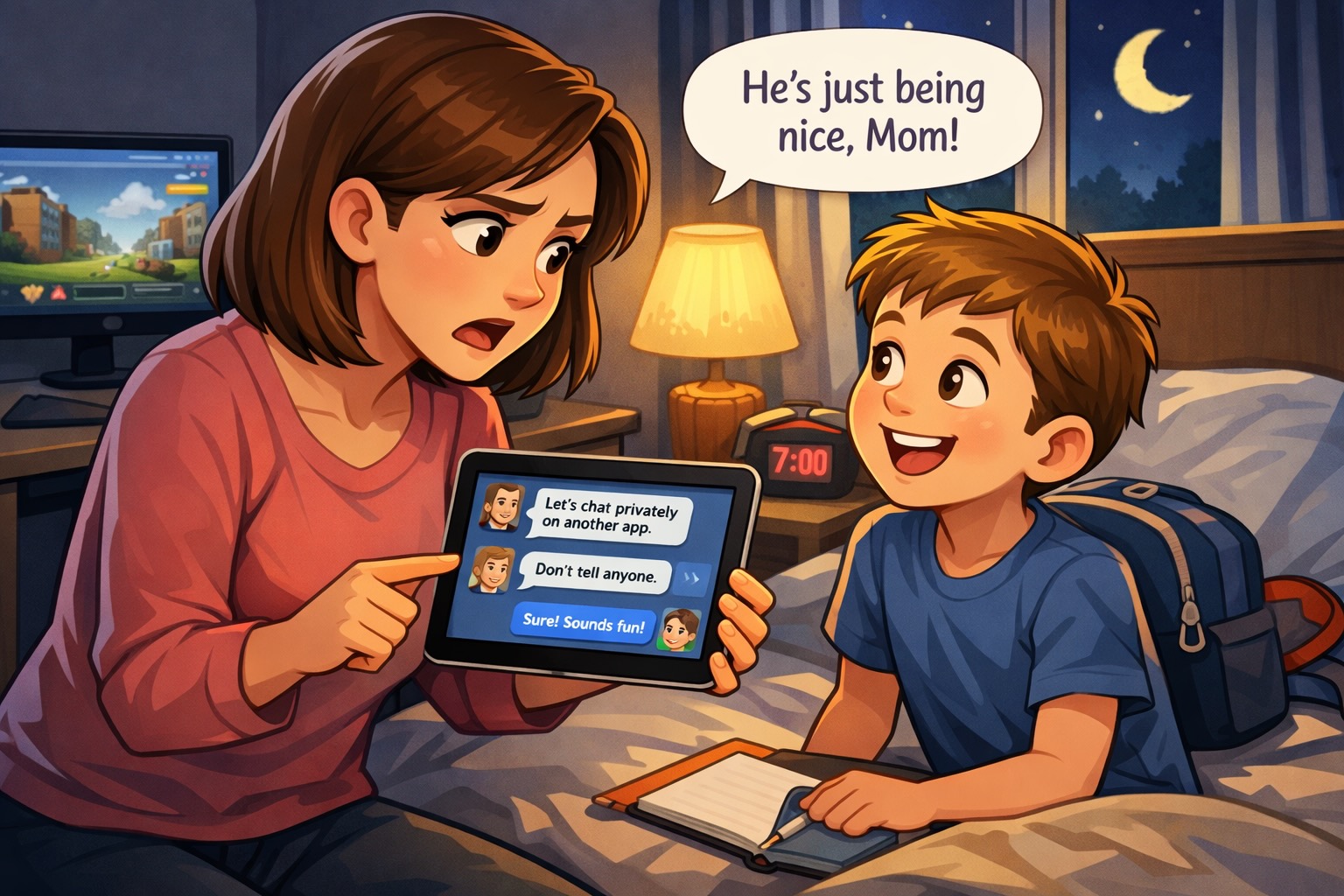
1. Unsafe Online Contact
A parent of a 10-year-old child receives a notification from the child’s tablet late on a school night. On checking, the parent discovers that the child has been exchanging messages in an online game with an unknown older user who is encouraging the child to move the conversation to a private messaging platform. The child appears excited rather than distressed and insists that the other person is “just being friendly”. The child is due to leave for school in 30 minutes.
The decision to be made is how the parent should act immediately in response to this situation.
Decision Choices
a) The parent listens to the child’s views and then decides how to deal with the situation.
b) The parent immediately stops the interaction, secures the device, explains what has been done and why.
c) The parent and child discuss the situation together and try to agree what to do.
d) The parent asks the child what they think should happen and allows them to decide.
Rate each: 1 = Totally inappropriate | 2 = Inappropriate | 3 = Unsure | 4 = Appropriate | 5 = Highly appropriate.
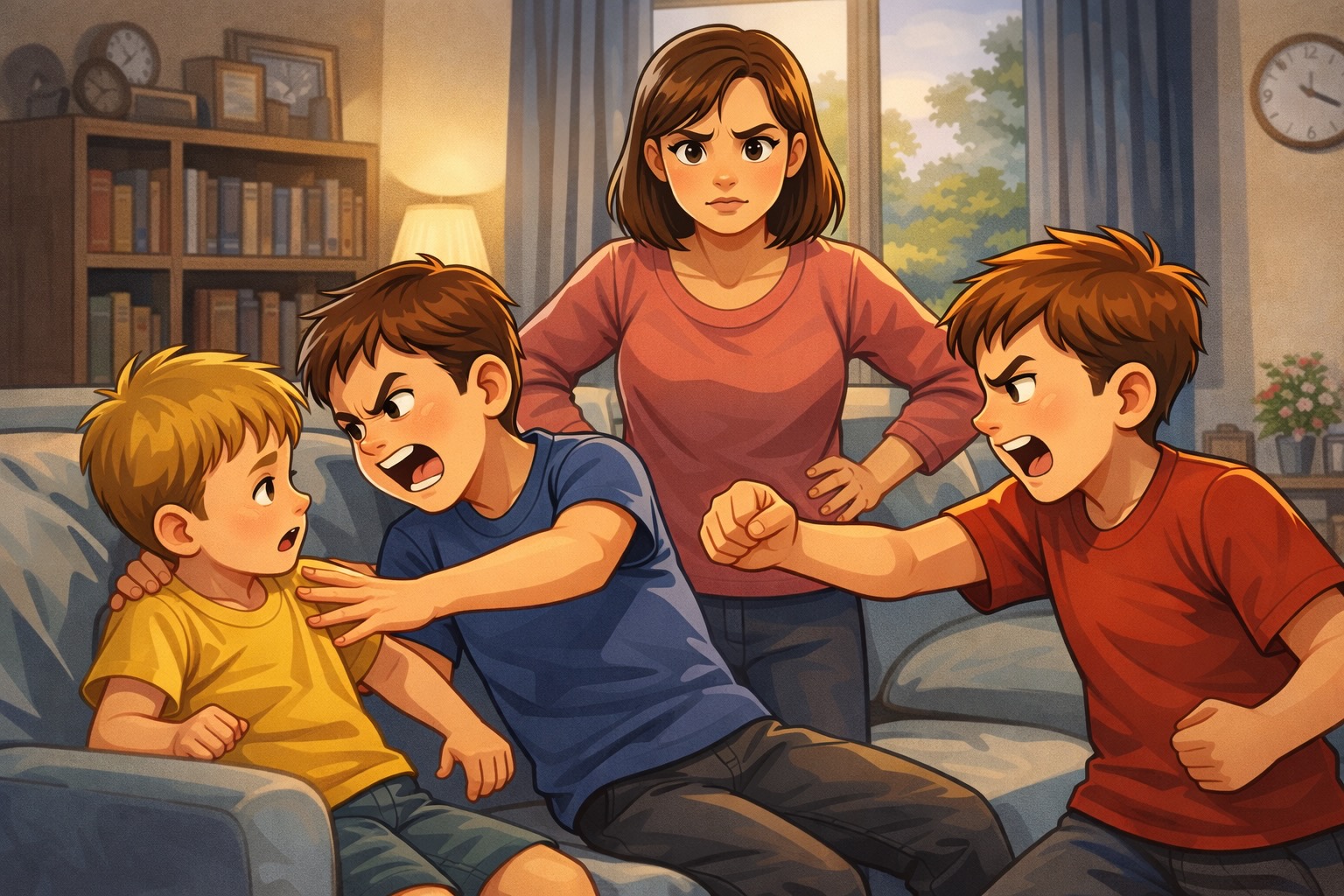
2. Hitting Out
A parent has noticed a recurring pattern at home: when the youngest child offers an idea or suggestion, the two older children routinely respond by disagreeing sharply and sometimes hitting out physically. The parent has addressed this behaviour on several previous occasions, but it continues. The parent is concerned that the older children are not managing frustration appropriately and wants them to take greater responsibility for their behaviour, particularly given the age gap between them and the youngest child.
As this is a repeated and predictable pattern, the parent is keen to intervene in a way that breaks the cycle rather than simply reacting to individual incidents. The parent has told the older children that the issue will be discussed later today when they return from school.
The decision to be made is how the parent should intervene to stop the older children hitting out.
Decision Choices
a) The parent and children try to reach a joint agreement about how the behaviour will stop.
b) The parent tells the children the behaviour must stop and explains the consequences.
c) The parent discusses the behaviour with the children, listens to their views, and then sets expectations and consequences.
d) The parent leaves it to the children to sort the problem out themselves.
Rate each: 1 = Totally inappropriate | 2 = Inappropriate | 3 = Unsure | 4 = Appropriate | 5 = Highly appropriate.
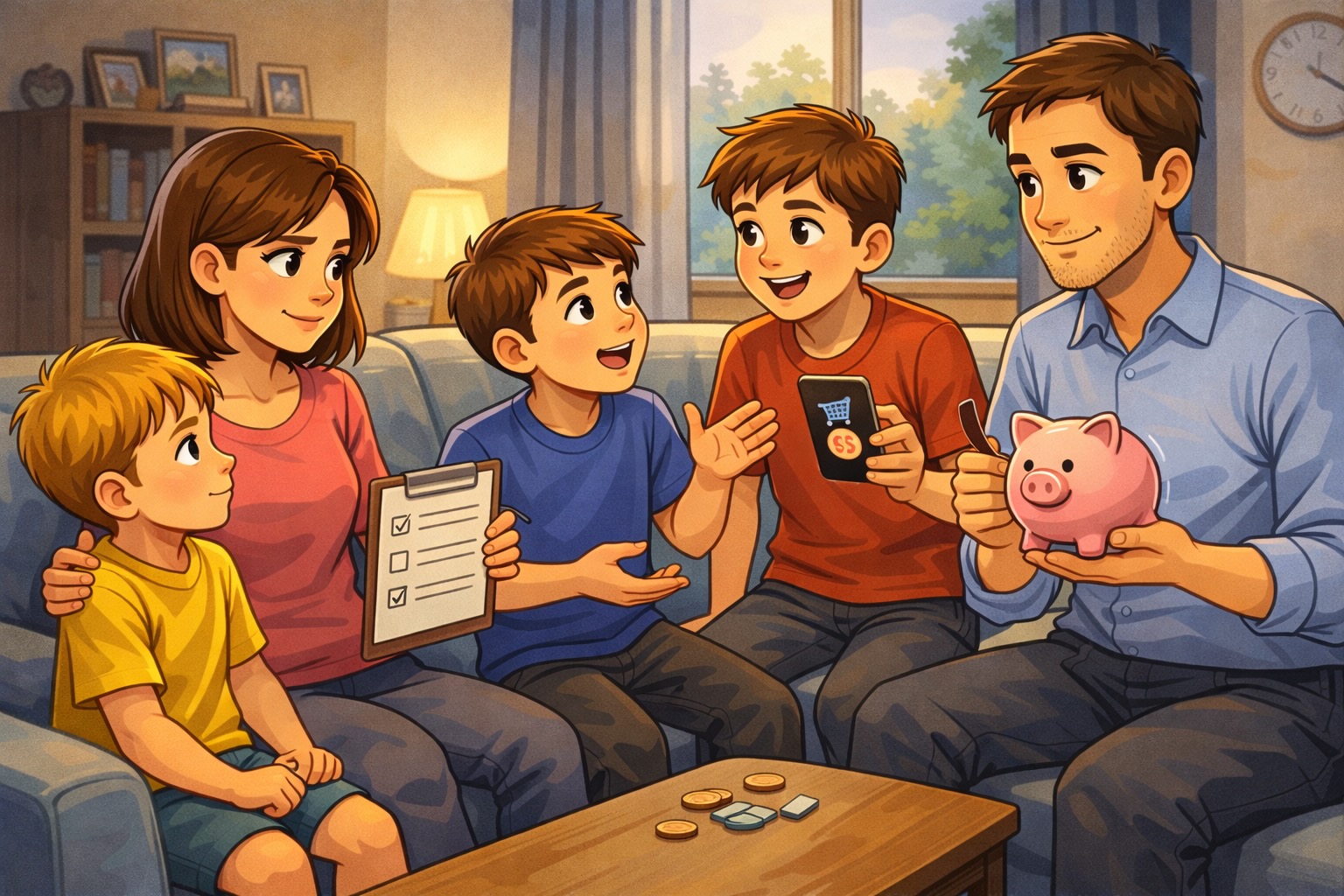
3. Pocket Money Review
The parents decide that it is time to review the children’s pocket money. It has been a year since the amount was last set. Although the children have not requested a change, the parents are aware that the current amount is below average for children of this age. Pocket money is linked to agreed chores and to items the children are expected to pay for themselves.
The parents see this as a good opportunity to help the children learn about money, fairness, and responsibility. There is no sense of urgency, and the parents do not anticipate significant disagreement.
The decision to be made is how the amount of pocket money should be set.
Decision Choices
a) The parents decide the new amount and tell the children.
b) The parents leave it to the children to decide the amount.
c) The parents and children discuss the matter and reach a joint agreement.
d) The parents ask for the children’s views and then decide.
Rate each: 1 = Totally inappropriate | 2 = Inappropriate | 3 = Unsure | 4 = Appropriate | 5 = Highly appropriate.

4. Birthday Present
A child wants to buy a birthday present for her older brother. She has enough pocket money to do so, but there are other family birthdays coming up and she will need to think carefully about how much to spend. She is still learning to manage money and, without guidance, may spend more than is sensible.
The parents see this as a good opportunity to help the child think about generosity, limits, and planning ahead. There is no urgency and no anticipated conflict.
The decision to be made is how to guide the child on the amount to spend on the birthday present.
Decision Choices
a) The parent decides how much the child should spend.
b) The parent and child discuss options and agree an amount together.
c) The parent leaves the decision entirely to the child.
d) The parent listens to the child’s ideas and then decides the amount.
Rate each: 1 = Totally inappropriate | 2 = Inappropriate | 3 = Unsure | 4 = Appropriate | 5 = Highly appropriate.
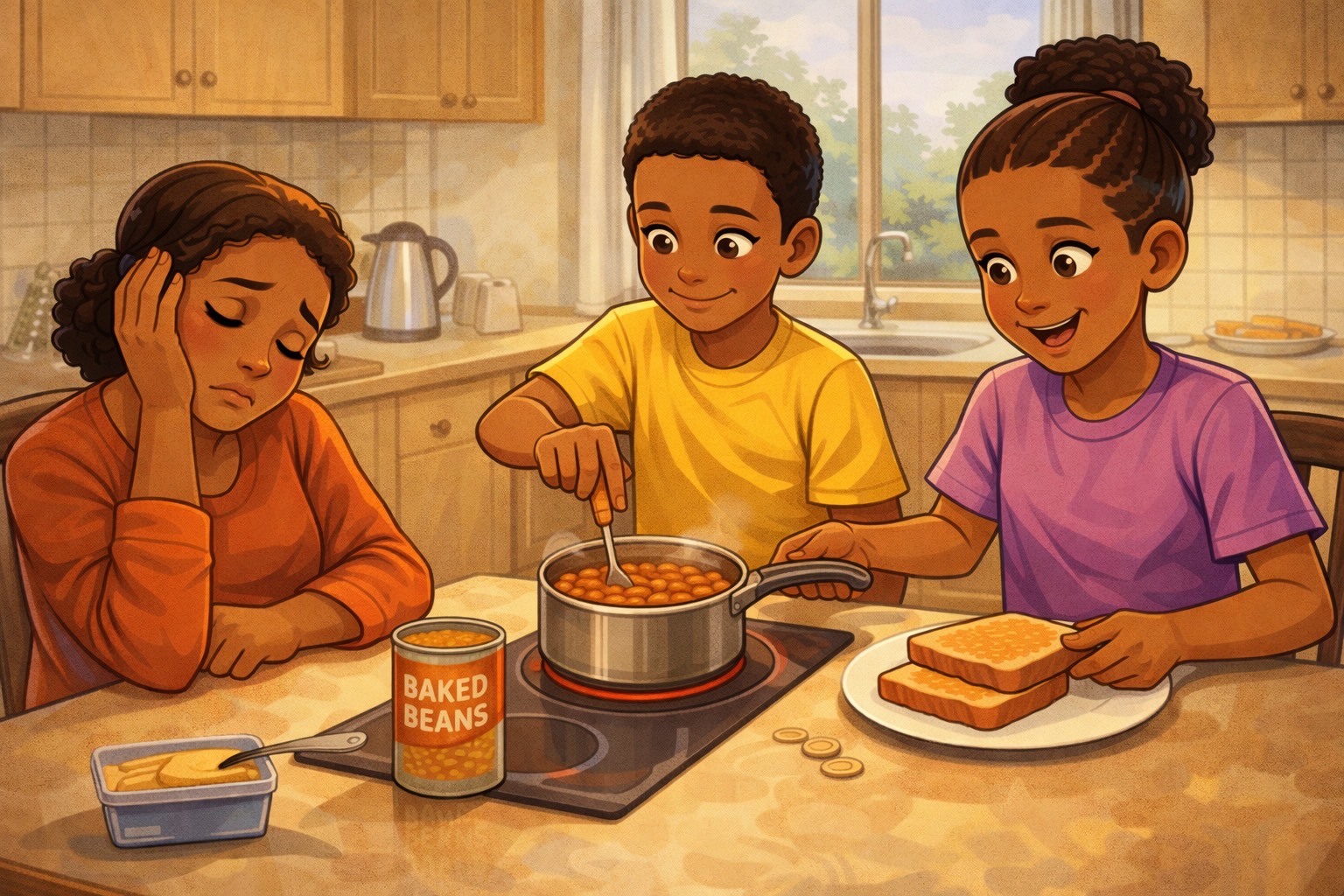
5. Food for Thought
A parent is feeling unwell and does not feel able to prepare lunch. Their ten-year-old twins say they are hungry and ask if they can make their own lunch. The parent suggests sandwiches, but the children ask whether they can have beans on toast instead.
The children have recently baked at school and regularly help with cooking at home. They have heated beans before under supervision and understand how to use the hob safely. Although they have not used it alone before, the parent believes they are capable and trustworthy. There is no urgency and no anticipated disagreement.
The decision to be made is what the children should have for lunch and how that decision should be managed.
Decision Choices
a) The parent tells the children what they will have for lunch.
b) The parent discusses options with the children and agrees together.
c) The parent listens to the children and then decides.
d) The parent allows the children to decide and prepare lunch themselves.
Rate each: 1 = Totally inappropriate | 2 = Inappropriate | 3 = Unsure | 4 = Appropriate | 5 = Highly appropriate.
NOW TURN TO THE PJI-MINI SCORING AND INTERPRETATION PAGE